









US President Joe Biden and Republican House Speaker Kevin McCarthy reached an agreement after intense budget negotiations spanning several weeks, aiming to avert potential global financial upheaval.
What is the US Debt Ceiling?
A statutory cap on the total amount of debt that the US government can issue to fund its operations is known as the debt ceiling. The total amount of money the government can borrow to pay its obligations is limited by this ceiling, which is set by Congress.
The Treasury Department must take action to prevent going into financial default when the debt ceiling is reached or nearly reached. These so-called “extraordinary measures,” which include moving money between accounts and suspending some investments in federal employee retirement funds, among other things, enable the government to function for a short while.
The US could potentially default on its debt obligations if all other options are exhausted and the debt ceiling is not raised.
This could have negative economic effects on the U.S. government’s ability to manage its finances, which would be felt both domestically and internationally.
Congress has typically increased the debt ceiling in the past to prevent defaults. However, the process has frequently been politically divisive, with discussions and negotiations centered on issues like fiscal policy, taxation, and government spending. History shows that the debt ceiling has frequently been raised, and that failure to do so could have serious negative effects on the economy and financial markets.
How was the stock market affected?
The SP500, Nasdaq, Dow have fallen by -1.12%, -1.26% and -0.69% respectively. The table below indicates that the stock market declined due to uncertainty of a deal not being reached, while time was of the essence.
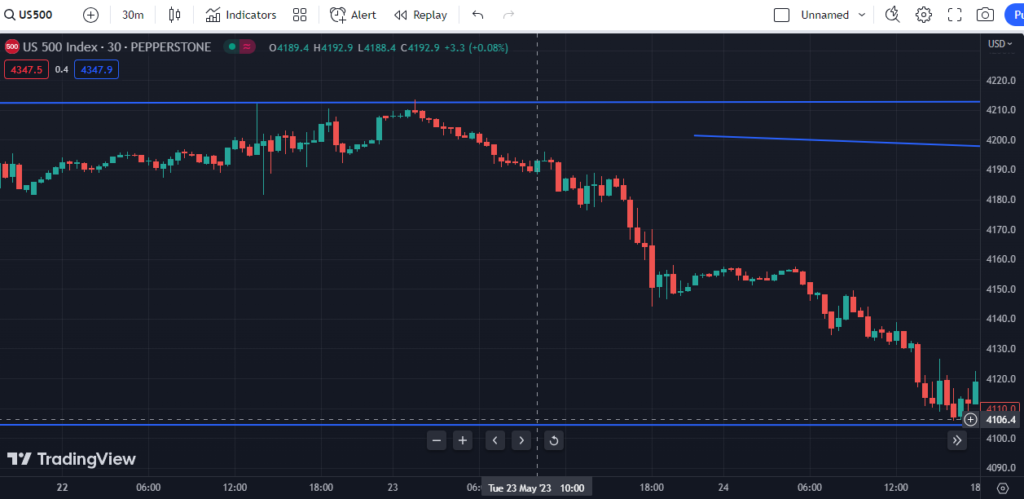
Wall St ends sharply lower on deadlocked debt ceiling talks
However, the stock market rallied after some news that a deal might be reached, leading the S&P500 and other indices to rally in favour of a deal from the Democrats and Republicans. According to The New York Times President Biden and Speaker Kevin McCarthy on Saturday reached an agreement in principle to lift the debt limit for two years , which lead to an even further rally of the S&P500.
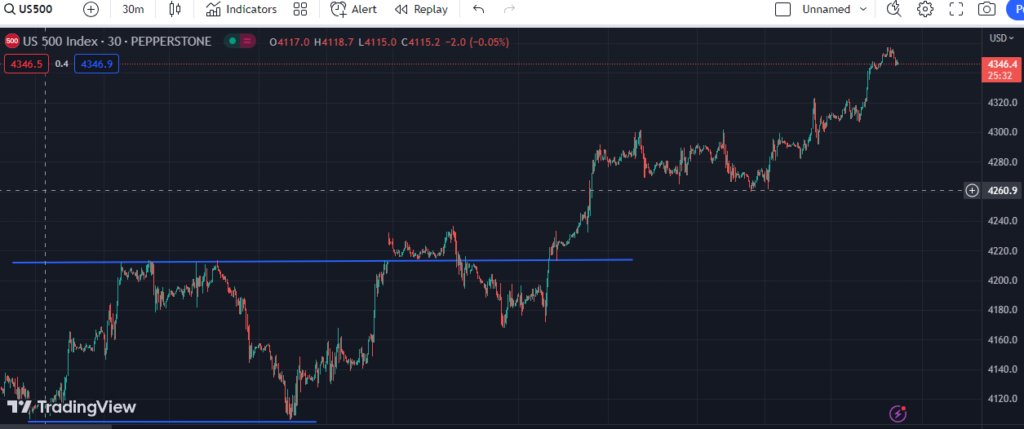
As we can all see from the charts above, the debt ceiling was a major fundamental part that had an effect on the global financial markets. Without a deal to increase the debt ceiling, the stock market. According to Moody’s, even a short debt ceiling breach could lead to a decline in real GDP, nearly 2 million lost jobs, and an increase in the unemployment rate to nearly 5 percent from its current level of 3.5 percent.
Four (4) major impacts that the debt ceiling can have on the financial markets.
The impact of the debt ceiling on the financial and stock markets can be significant and potentially disruptive. Here are a few ways it can affect them:
- Government Shutdown: If the debt ceiling is not raised in a timely manner and the government exhausts its available cash reserves, it may lead to a government shutdown. This means that non-essential government services and programs would be halted, which can have a negative impact on the economy and investor sentiment.
- Uncertainty and Investor Confidence: The debt ceiling debate can create uncertainty in financial markets. Investors may become concerned about the government’s ability to meet its financial obligations, potentially leading to a loss of confidence in the economy. This can result in increased market volatility as investors may sell off stocks and seek safer assets.
- Interest Rates and Borrowing Costs: If the debt ceiling is not raised and the government is unable to borrow more money, it may lead to a downgrade in the country’s credit rating. A lower credit rating can increase borrowing costs for the government, as it may have to offer higher interest rates to attract buyers for its debt. This can have a ripple effect on interest rates throughout the economy, affecting consumer loans, mortgages, and corporate borrowing, which in turn can impact stock market performance.
- Market Disruptions: The uncertainty surrounding the debt ceiling can lead to market disruptions, particularly in the bond market. Investors holding Treasury bonds may become concerned about the potential for default or delayed payments. As a result, they may demand higher yields on Treasury bonds, causing their prices to fall. This can also spill over into other parts of the financial markets, impacting stock prices and overall market stability.
It’s important to note that the actual impact of the debt ceiling on the financial and stock markets can vary depending on various factors, such as the specific circumstances, investor sentiment, and broader economic conditions. Political negotiations and market reactions play a crucial role in determining the extent of the effects.