









The Consumer Price Index (CPI) is a measure of the average change over time in the prices paid by urban consumers for a market basket of goods and services. It is often used as an indicator of inflation and the purchasing power of the currency. The CPI in the United States is published by the Bureau of Labor Statistics (BLS) and is widely followed by economists, policymakers, and the public.
The CPI tracks the costs of a variety of goods and services that reflect urban consumers’ spending patterns. The basket is filled with a variety of things, including food, housing, transportation, health care, education, and entertainment. The CPI calculates an estimate of the overall price level and inflation rate by tracking changes in the cost of these items.
Consumer Price Index News release June, 13, 2023
Before we can look at the “Four (4) massive effects that the Consumer Price Index (CPI) has on the economy”, let us first have a little analysis of the US CPI release of June, 13, 2023, which came down to 4.0% from a forecast of 4.1% and a previous of 4.9%. The aforementioned data was retrieved from investing.com . This was taken as positive number by the stock market and currencies traded against the dollar, which lead them surge in price (at the expense of the dollar declining). The charts bellow indicate how the dollar lost some strength after the release of the data report for some few minutes.
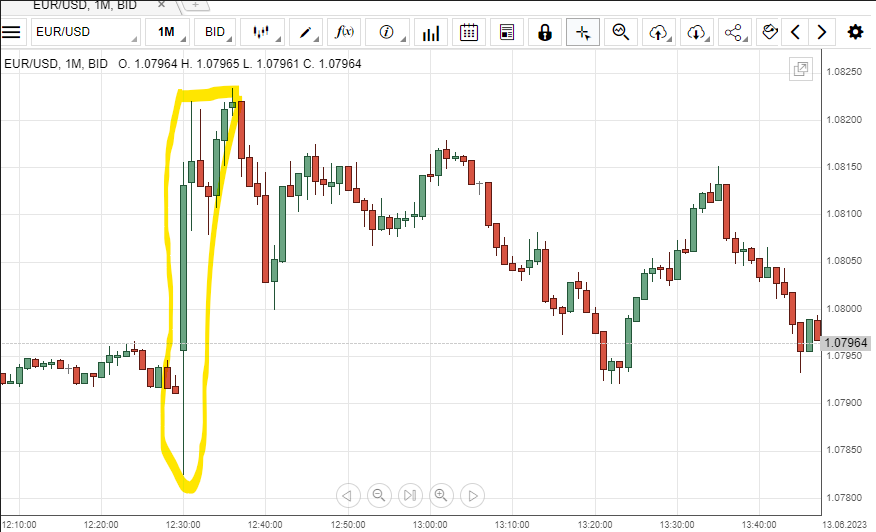

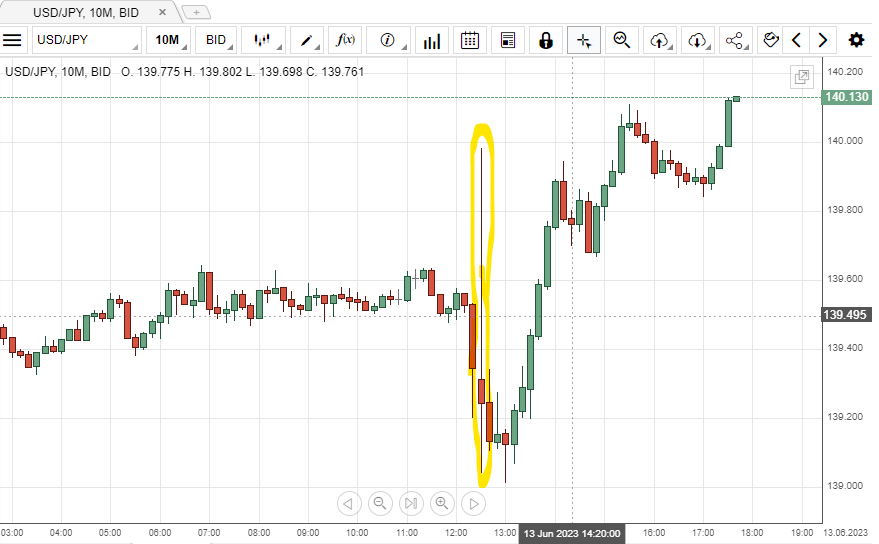
However, as seen on the above charts namely the EUR/USD, GBP/USD and USD/JPY, the dollar did not decline for long as it gained strength after forex markets absorbed the Consumer Price Index news.
Without any further adieu, here are the “Four (4) massive effects that the Consumer Price Index (CPI) has on the economy”:
- Inflation Measurement
The CPI is a vital tool for gauging economic inflation. The CPI fluctuates to reflect changes in the general level of prices. When the CPI rises, inflation is present, which reduces consumer purchasing power. High inflation can have an adverse effect on many areas of the economy, including the standard of living and the cost of borrowing.
2. Cost-of-Living Adjustments
The Consumer Price Index (CPI) is utilized to modify numerous payments and benefits in response to fluctuations in the cost of living. For instance, Social Security benefits, pensions, and certain wage contracts are frequently linked to the CPI. When the CPI increases, these payments and benefits are raised to ensure that recipients can maintain their purchasing power.
3. Monetary Policy and Interest Rates
Central banks, including the Federal Reserve in the U.S., closely monitor inflation, including the CPI, to formulate monetary policy. If the CPI indicates rising inflation, central banks may respond by raising interest rates to control inflationary pressures. Higher interest rates can influence borrowing costs, investment decisions, and economic activity.
4. Business and Consumer Behavior
Changes in the CPI can impact the behavior of businesses and consumers. For businesses, higher inflation may lead to increased production costs and reduced profit margins. They may pass on the higher costs to consumers through price increases, potentially reducing consumer demand. Consumers, on the other hand, may alter their spending patterns based on the changing prices of goods and services captured by the CPI.
It’s critical to remember that the CPI has drawbacks and detractors. Some contend that because spending patterns vary among individuals, it might not accurately reflect the cost of living for all groups. Furthermore, when prices change, the Consumer Price Index does not take into account effects from substitution or changes in quality. However, it continues to be a popular and significant indicator of price changes and inflation trends in the US.