








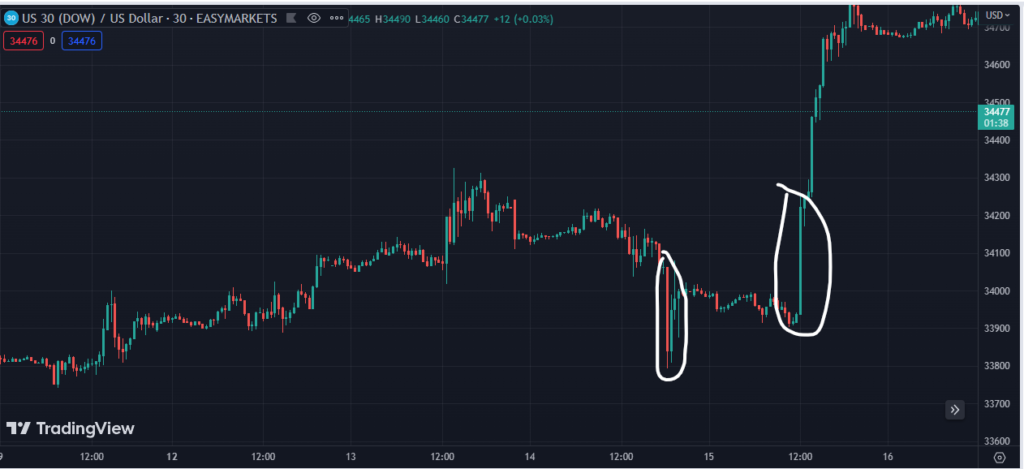
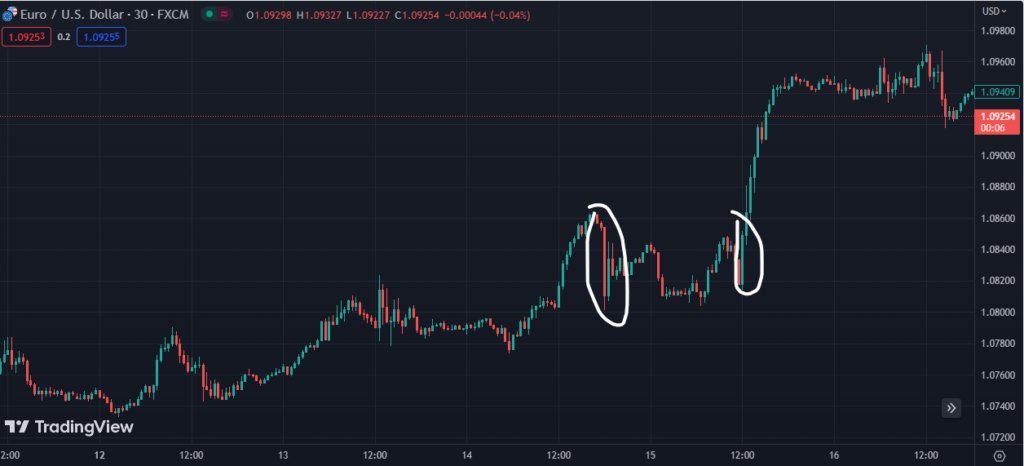
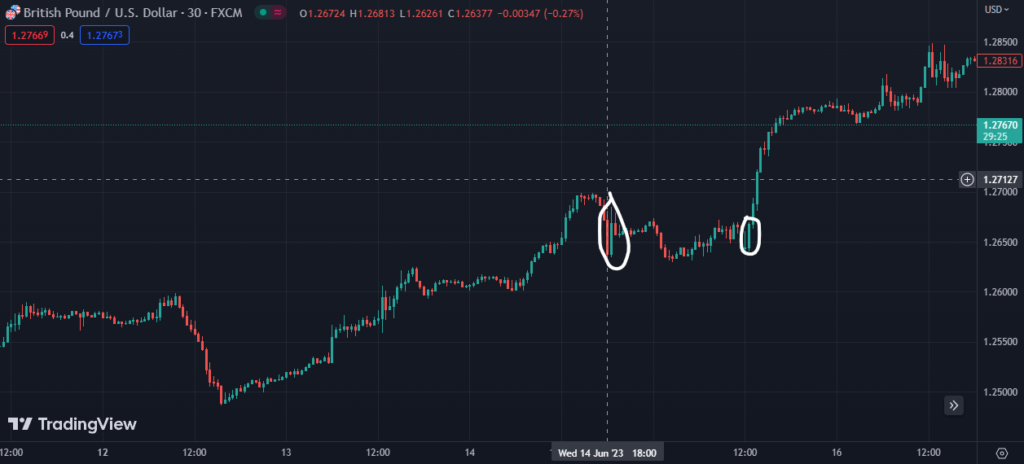
On the 14th of June 2023, The FOMC Interest Rate was paused at 5.25% which initially dropped the markets including the SP500, Dow30, Nasdaq100 and every currency that traded against the US Dollar (as seen below). The news release candle is marked by the white circle.
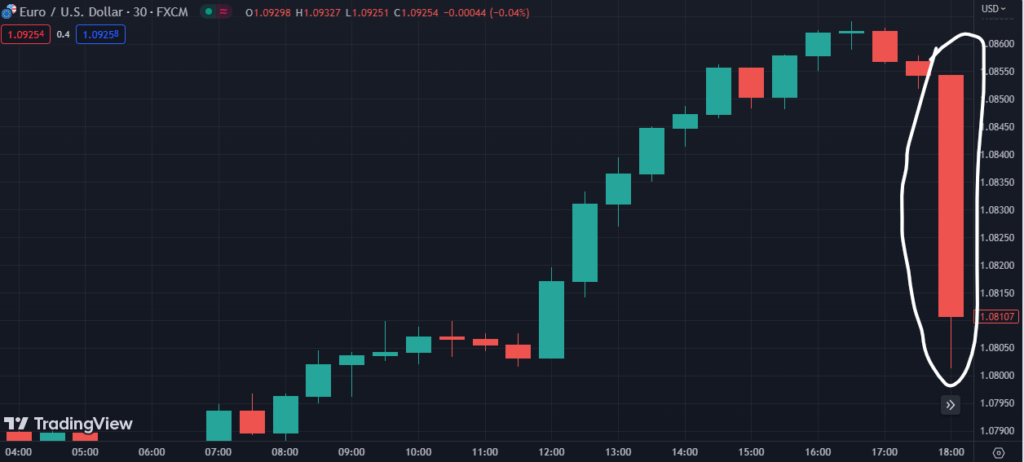
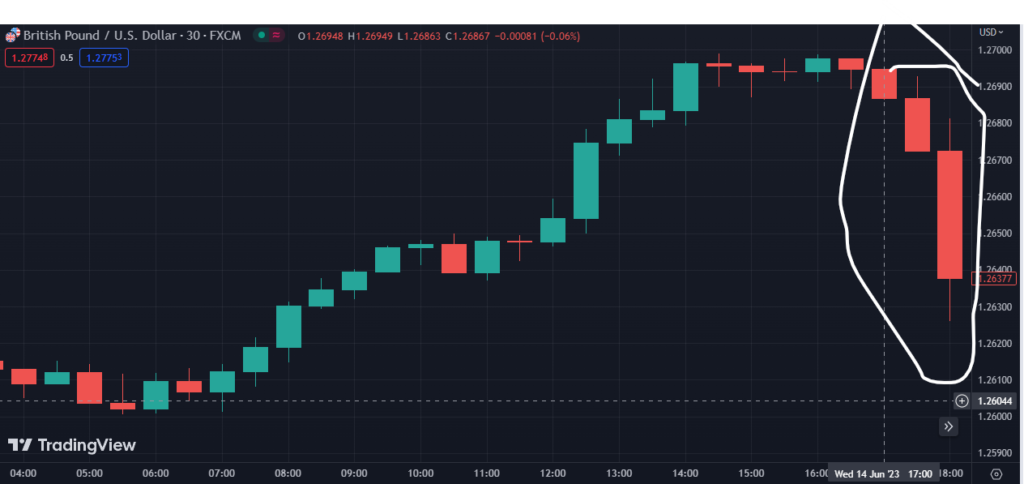
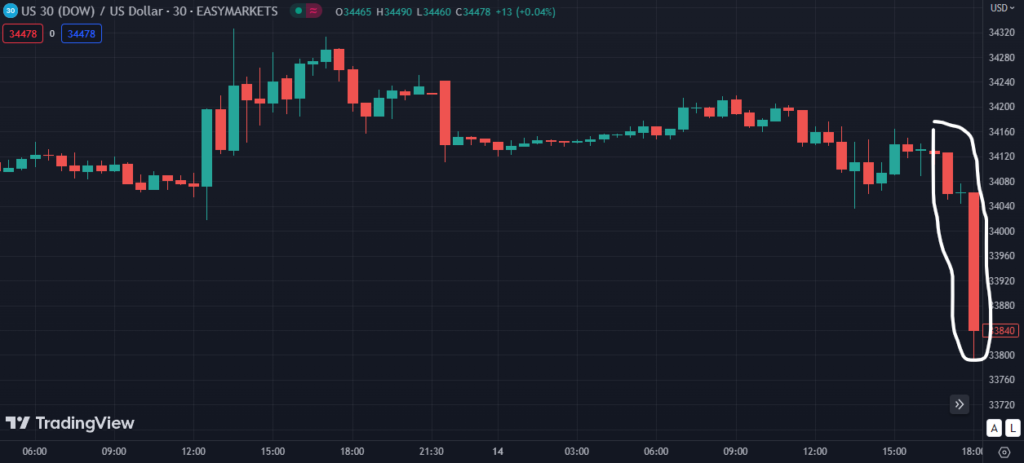
However, the markets including the SP500, Dow30, Nasdaq100 and every currency that traded against the US Dollar consolidated as a form of absorbing the interest rate hike pause and continued to rally in its upward trajectory.
Understand the importance and effects of the US Federal Open Market Committee (FOMC) interest rate on the global economy. Learn how FOMC decisions influence financial markets, borrowing costs, capital flows, commodity prices, and global growth. Here are the five key importance and effects of the US FOMC interest rate on the global economy:
1. Global Financial Markets
The FOMC interest rate decisions have a substantial impact on global financial markets. Since the U.S. dollar is the world’s primary reserve currency, changes in U.S. interest rates can trigger significant volatility in currency exchange rates, bond markets, and equity markets around the globe. Investors closely monitor FOMC decisions as they affect global investment flows and can lead to substantial capital movements between countries.
2. Global Borrowing Costs
The FOMC interest rate influences global borrowing costs. When the FOMC raises interest rates, it becomes more expensive for global borrowers to access U.S. capital markets, leading to higher borrowing costs for governments, corporations, and individuals worldwide. This can impact investment decisions, economic growth, and financial stability across the globe.
3. Capital Flows
The FOMC interest rate decisions influence capital flows between countries. Higher U.S. interest rates can attract capital from other nations as investors seek higher yields, leading to a strengthening of the U.S. dollar. This can result in capital outflows from emerging markets and other countries, potentially causing financial instability and currency depreciation in those economies.
4. Commodity Prices
The FOMC interest rate decisions can impact commodity prices, particularly those denominated in U.S. dollars. When U.S. interest rates rise, it strengthens the U.S. dollar, which tends to put downward pressure on commodity prices. This affects commodity-exporting countries and can have widespread ramifications for global trade and inflation.
5. Global Growth and Stability
The FOMC interest rate decisions have spillover effects on global economic growth and stability. Changes in U.S. interest rates can influence borrowing costs, investment decisions, and business sentiment globally. Tightening monetary policy by raising rates can dampen global economic activity, while easing policy by lowering rates can stimulate growth. The FOMC’s actions, therefore, play a crucial role in shaping global economic conditions.
It’s worth noting that the importance and effects of the US FOMC interest rate on the global economy can vary depending on the specific economic conditions and circumstances at any given time. Additionally, other factors such as fiscal policies, geopolitical events, and global trade dynamics also contribute to the overall impact on the global economy.